
Welcome to Daifeng Wang Laboratory!

ARTEMIS integrates autoencoders and schrödinger bridges to predict continuous dynamics of gene expression, cell population and perturbation from time-series single-cell data, Bioinformatics (ISMB/ECCB 2025), 41, supplement 1, 189-197, 2025 
BOMA – a machine learning framework for comparative gene expression analysis across brains and organoids, Cell Reports Methods, 3, 100409, 2023 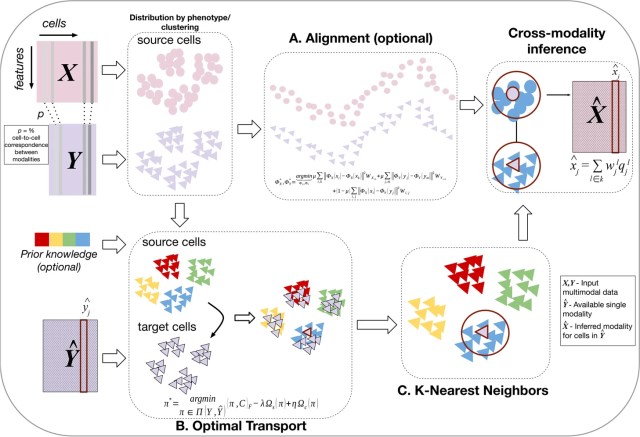
CMOT: Cross-Modality Optimal Transport for multimodal inference, Genome Biology, 24, 163, 2023 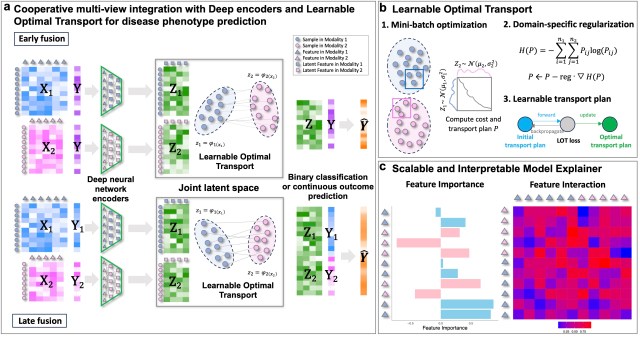
COSIME: Cooperative multi-view integration with Scalable and Interpretable Model Explainer, Nature Machine Intelligence, 7, 1636–1656, 2025 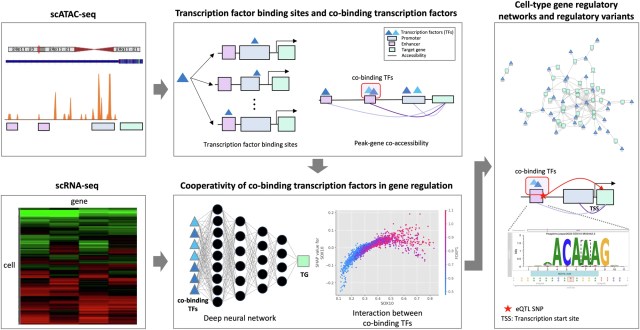
CoTF-reg reveals cooperative transcription factors in oligodendrocyte gene regulation using single-cell multi-omics, Communications Biology, 8, 181, 2025 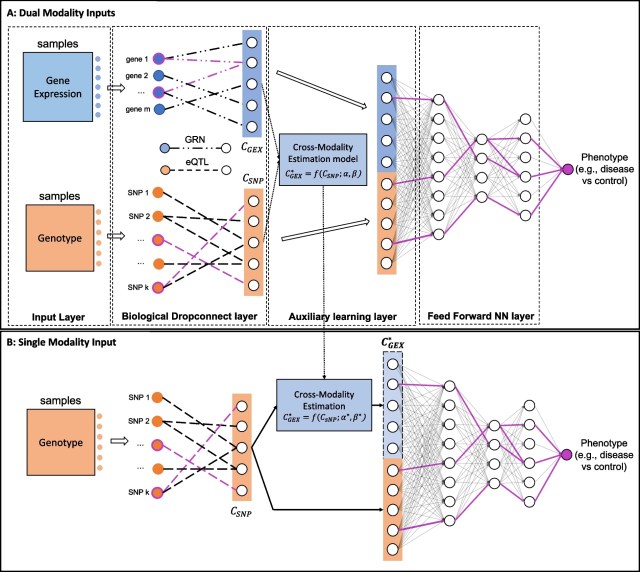
DeepGAMI: deep biologically guided auxiliary learning for multimodal integration and imputation to improve phenotype prediction, Genome Medicine, 15, 88, 2023 
A deep manifold-regularized learning model for improving phenotype prediction from multi-modal data, Nature Computational Science, 2, 38–46, 2022 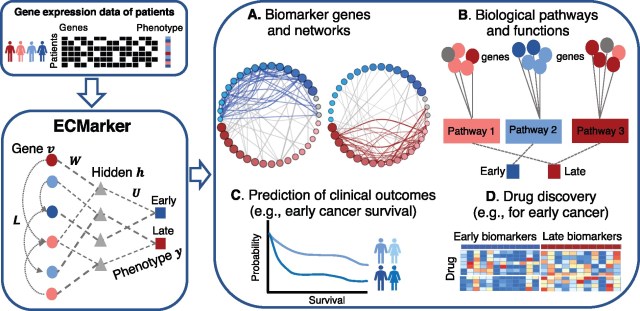
ECMarker: Interpretable machine learning model identifies gene expression biomarkers predicting clinical outcomes and reveals molecular mechanisms of human disease in early stages, Bioinformatics, 37 (8), 1115-1124, 2021 
Joint Variational Autoencoders for Multi-Modal Imputation and Embedding, Nature Machine Intelligence, 5, 631–642, 2023 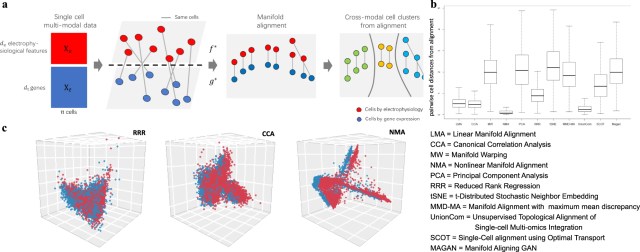
Manifold learning analysis suggests strategies for aligning single-cell multi-modalities and revealing functional genomics for neuronal electrophysiology, Communications Biology, 4, 1308, 2021 
ManiNetCluster: A Manifold Learning Approach to Reveal the Functional Linkages Across Multiple Gene Networks, BMC Genomics 20, 1003, 2019 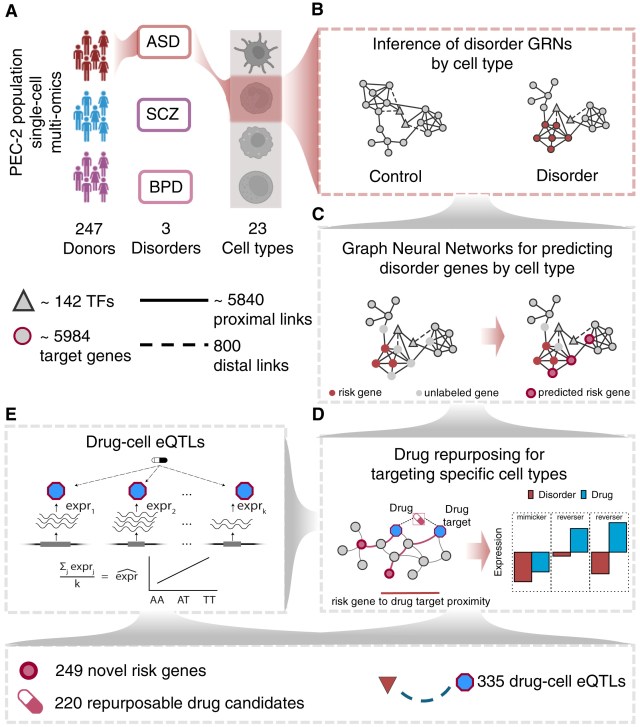
Network-based drug repurposing for psychiatric disorders using single-cell genomics, Cell Genomics, 101003, 2025 
scGRNom: a computational pipeline of integrative multi-omics analyses for predicting cell-type disease genes and regulatory networks, Genome Medicine, 13, 95, 2021 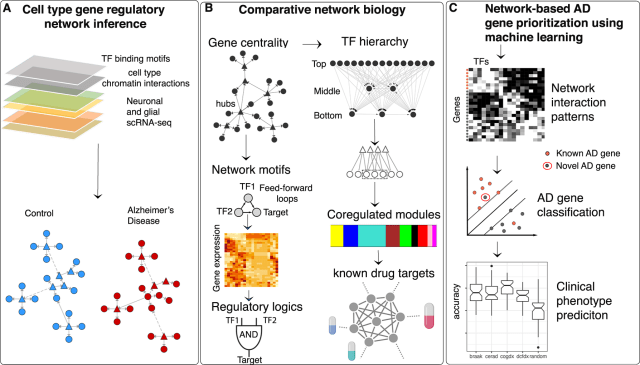
Single-cell network biology characterizes cell-type gene regulation for drug repurposing and phenotype prediction in Alzheimer’s disease, PLoS Computational Biology, 18(7): e1010287, 2022 
Varmole: A biologically drop-connect deep neural network model for prioritizing disease risk variants and genes, Bioinformatics, 37 (12), 1772-1775, 2021 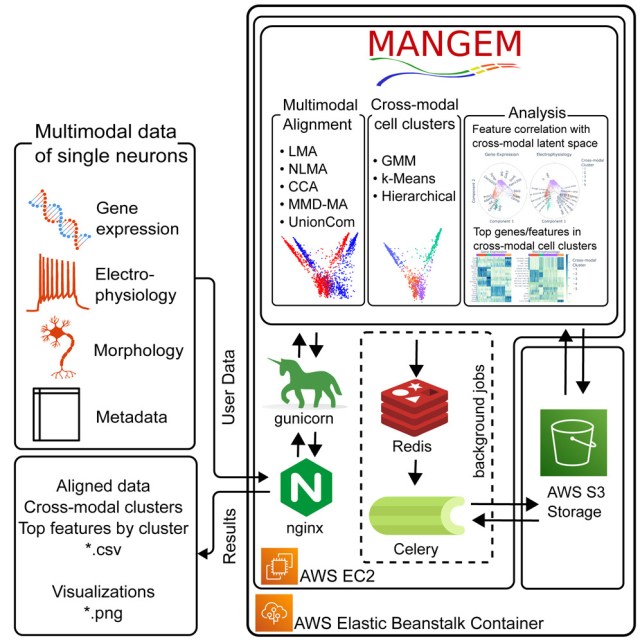
MANGEM: a web app for Multimodal Analysis of Neuronal Gene expression, Electrophysiology and Morphology, Patterns, 4, 100847, 2023 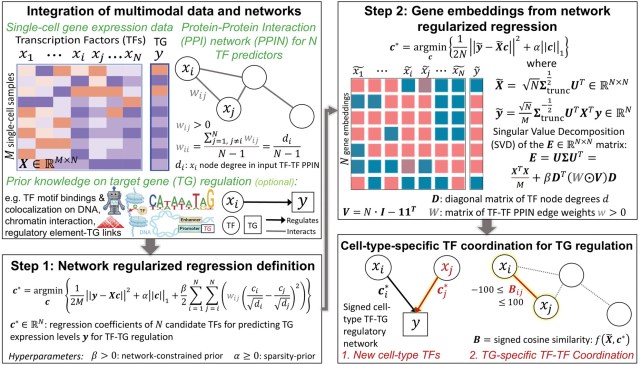
NetREm: Network Regression Embeddings reveal cell-type transcription factor coordination for gene regulation, Bioinformatics Advances, vbae206, 2025 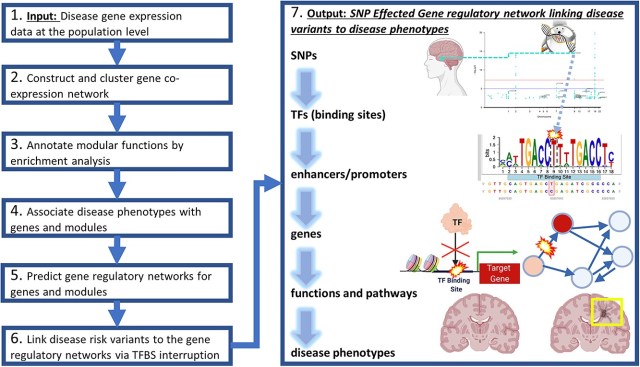
Predicting brain-regional gene regulatory networks from multi-omics for Alzheimer’s disease phenotypes and Covid-19 severity, Human Molecular Genetics, Volume 32, Issue 11, Pages 1797–1813, 2023 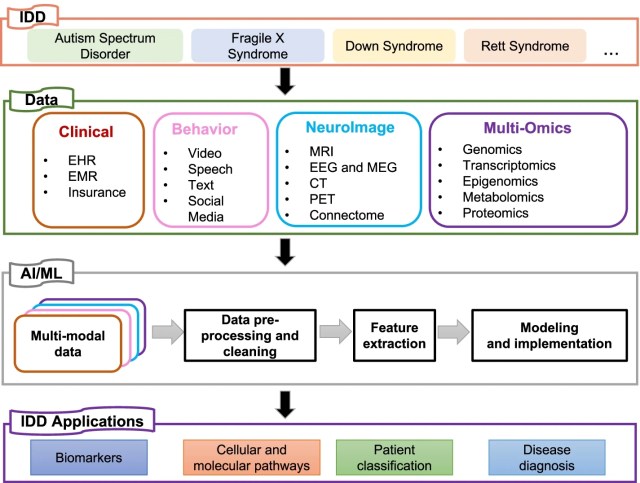
Bringing machine learning to research on intellectual and developmental disabilities: taking inspiration from neurological diseases, Journal of Neurodevelopmental Disorders, 14, 28, 2022 
Protocol for comparative gene expression data analysis between brains and organoids using a cloud-based web-app, STAR Protocols, 5, 103375, 2024 
Multi-view learning for understanding functional multiomics, PLoS Computational Biology, 16(4): e1007677, 2020 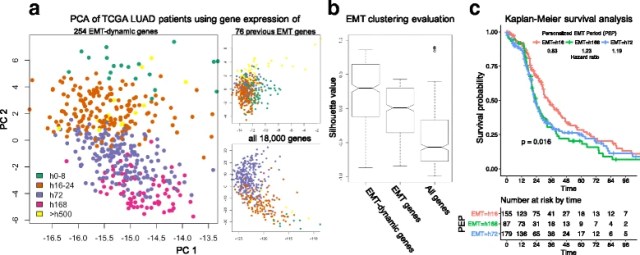
Comparative gene co-expression network analysis of epithelial to mesenchymal transition reveals lung cancer progression stages, BMC Cancer, 17:830, 2017
We develop machine learning and artificial intelligence (ML/AI) approaches and bioinformatics tools to bridge computation and biology for mechanistic insights into complex brains and brain diseases. Our applications focus on functional genomics, gene regulation, cell dynamics and neural circuits. We are grateful for the funding support from National Institutes of Health, National Science Foundation, Simons Foundation Autism Research Initiative, and the University of Wisconsin-Madison. Please see our Research, Publications, Tools, and News!
 Daifeng Wang Laboratory